Wet Floors, Wet Walls: Stopping Mold After a Nashville Leak
A supply line that splits during a hard freeze, a roof that lets go in a spring downpour, a water heater that quietly fails in the basement. The next 48 hours usually settle the bill: a drying job, or a mold job.
The EPA advises drying water-damaged materials within 24–48 hours to prevent mold. Fixr puts water damage restoration at $1,200–$5,000 (average $3,000); mold remediation in the same guide runs $1,500–$9,000. Fast drying is usually the cheaper path, and flood or sewage water needs more aggressive cleanup than a clean pipe leak.
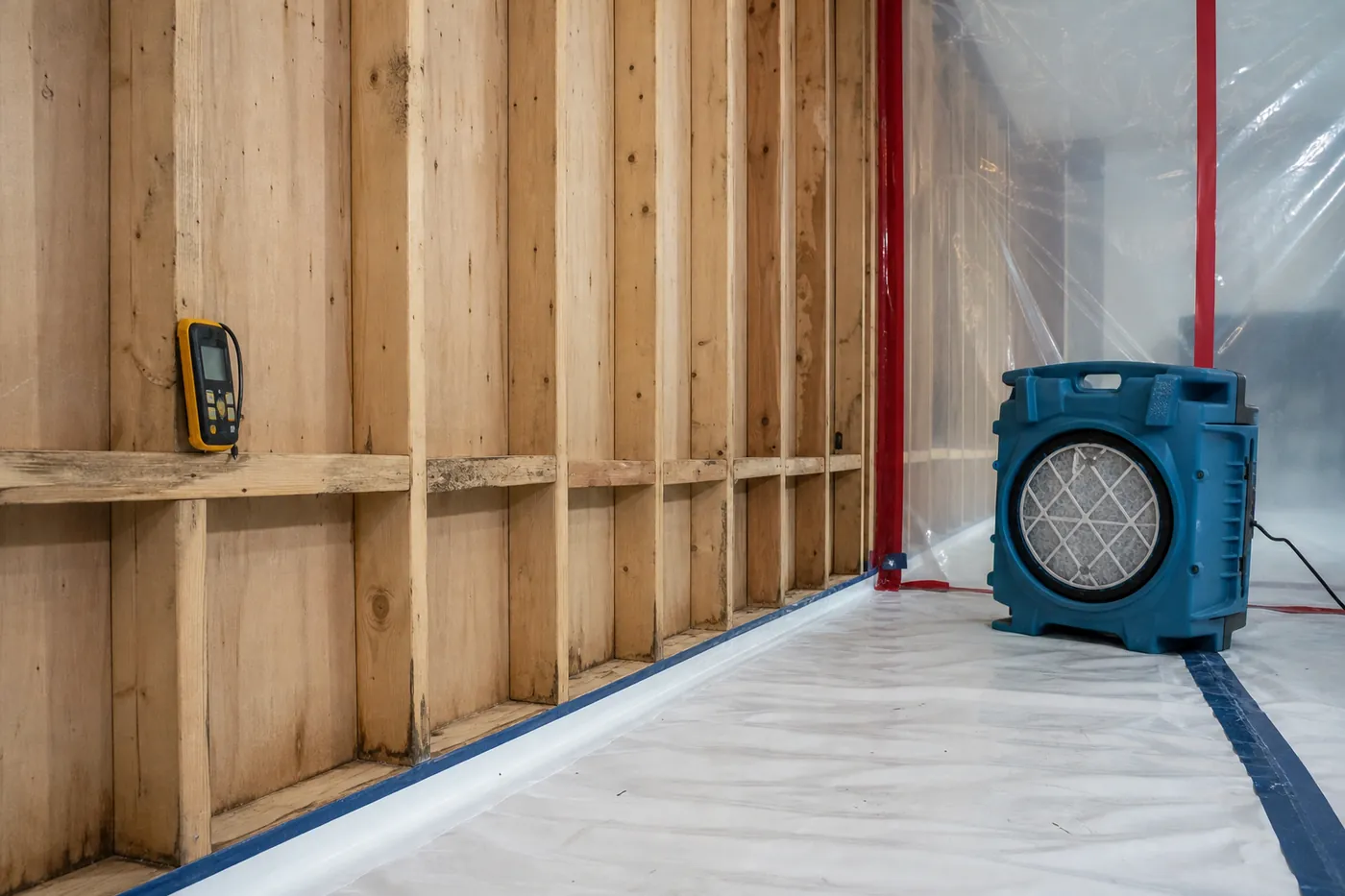
How do you stop water damage from turning into mold?
- Close the valve under the fixture, or the house main if you can't find one. Cut power to wet rooms if you can reach the panel safely.
- Photograph the water, the source and damaged belongings before moving anything.
- Pull up wet rugs and set furniture legs on blocks or foil.
- Run fans and a dehumidifier, and open closets and cabinet doors.
- Have someone take meter readings, because a wall can feel dry to the hand while the cavity, subfloor or insulation behind it is still soaked.
Where the water comes from in Nashville
Spring storms are the big one. April and May are the two wettest months at Nashville International Airport, averaging 4.72 and 5.02 inches (NOAA normals), and that's when worn flashing, clogged gutters and leaky basement walls show themselves. Winter brings a different risk: FEMA counts two winter storm declarations among the nine federal disaster declarations for Davidson County since 2016, the latest in February 2026, and frozen supply lines can split inside walls and crawl spaces.
Year round, the usual suspects are washing machine hoses, toilet and ice maker lines, aging water heaters and air conditioner drain pans.
Keep it, or cut it out?
Drywall wet by clean water that dried within about two days, and is still firm and unstained, can usually stay. Board that stayed wet longer, wicked water up from a soaked floor, or shows growth is normally cut out a little above the highest wet line. Soaked insulation and carpet pad generally go. Water from a sewer backup or a flooded creek carries contamination, so more material is removed; Fixr prices extraction at $3.75–$4.25 a square foot for clean water and $7–$7.50 for black water. The creek flooding guide covers floodwater in detail.
Insurance and records
Insurers usually treat a pipe that bursts overnight differently from a drip that ran for months. Save pictures, store receipts for rented fans or a dehumidifier, and file any emergency plumber's bill. Request one line for drying and another for mold work, then hold both up against the typical mold removal costs.
Questions homeowners ask
How soon does mold start after a leak?
Within a day or two on damp drywall, lumber or carpet pad, which is why the EPA sets a 24 to 48 hour window for drying. A fan and a meter accomplish more than any spray from the store.
Tell us what you found
Choose the closest match and add a sentence about the room. A mold specialist who works in Nashville will phone you to go over it.